Get Ready to
Enjoy PeriActive
Launching Feb 2023
Sign up now to get an alert when the product is available and get a special 10% off!
SiSign up now to get an alert when the product is available and get a special 10% off!

Manage, Heal & Prevent
Gingivitis, Bleeding Gums, Sore Gums, Periodontitis, Post surgical wounds, Mouth Sores and Oral Inflammation
Monday, November 09, 2026
How Long Does Gingivitis Take to Heal? Recovery Timeline, Causes, and Care Tips
Gingivitis is an early form of gum disease that can cause redness, swelling, tenderness, and bleeding gums. The good news is that gingivitis is often reversible with proper oral hygiene and professional dental care. Discover how long it takes for inflamed gums to recover, what affects the healing process, and which daily habits can help support healthier gums.
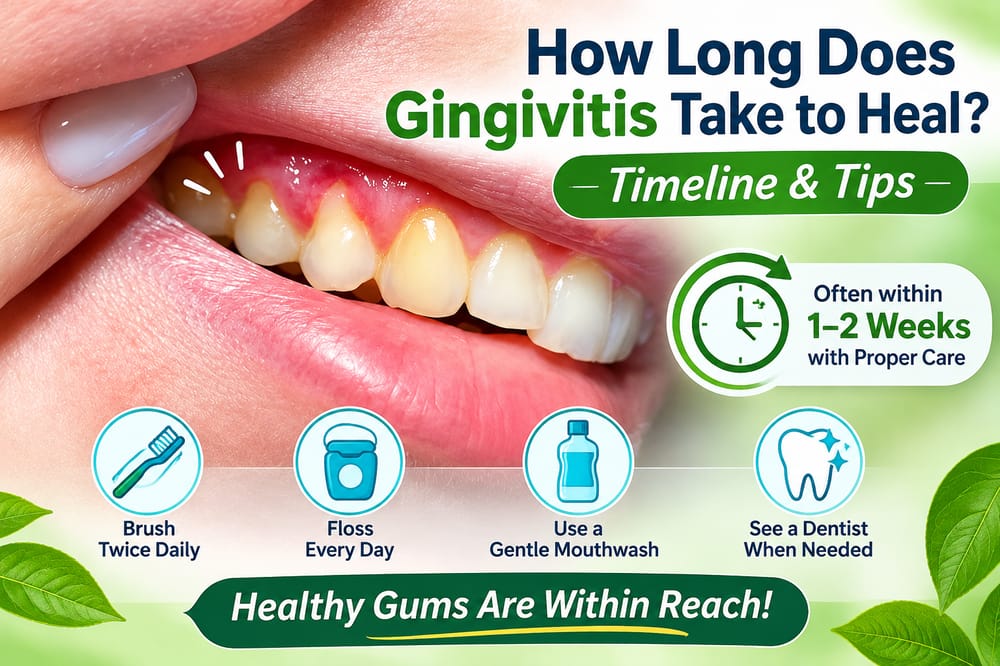
How Long Does Gingivitis Take to Heal?
Have you noticed that your gums bleed when brushing your teeth? Perhaps they look red, feel swollen, or become tender when you eat or floss. These symptoms may be signs of gingivitis, a common early stage of gum disease.
One of the first questions people ask after noticing these symptoms is: How long does gingivitis take to heal?
The encouraging news is that gingivitis is often reversible, especially when addressed early. With consistent oral hygiene, proper plaque removal, and professional dental care when necessary, many people begin noticing improvements in their gum health within several days to a couple of weeks. However, complete improvement can take longer depending on the severity of inflammation and individual circumstances.
Understanding what causes gingivitis, how the healing process works, and what you can do to support your gums can help you take better care of your oral health.
In this guide, we will discuss the typical gingivitis recovery timeline, common symptoms, factors that affect healing, and practical ways to maintain healthier gums.
What Is Gingivitis?
Gingivitis is inflammation of the gums, usually caused by plaque buildup along the gumline.
Plaque is a soft, sticky film of bacteria that naturally forms on your teeth throughout the day. When you eat and drink, bacteria in dental plaque interact with food particles and produce substances that can irritate the surrounding gum tissue.
If plaque is not removed regularly through brushing and cleaning between your teeth, it can accumulate around the gumline.
Over time, this may cause your gums to become inflamed.
Common signs of gingivitis include redness, swelling, tenderness, and bleeding when brushing or flossing. Some people also experience persistent bad breath.
Unlike advanced gum disease, gingivitis does not typically involve permanent damage to the bone supporting your teeth. This is why recognizing and addressing it early is important.
With appropriate care, the inflammation associated with gingivitis can often be reversed.
How Long Does Gingivitis Take to Heal?
The time it takes for gingivitis to heal depends on several factors, including how much plaque has accumulated, how inflamed the gums are, and whether the person follows an effective oral hygiene routine.
For mild gingivitis, noticeable improvements may begin within several days of consistent plaque removal. Many cases improve substantially within one to two weeks, although individual recovery times vary.
If inflammation is more significant or hardened plaque has accumulated below the gumline, professional dental cleaning may be necessary before the gums can improve properly.
It is helpful to understand that healing is a gradual process rather than something that happens overnight.
Here is a general idea of what the recovery process may look like.
First Few Days: Beginning to Reduce Plaque
During the first few days of improving your oral hygiene routine, your main goal is to remove plaque consistently.
Brush twice daily using a soft-bristled toothbrush and fluoride toothpaste. Clean between your teeth every day using dental floss or interdental brushes.
If your gums are inflamed, they may still bleed slightly during brushing or flossing. This does not necessarily mean that your gums are getting worse.
However, you should use gentle techniques rather than brushing harder or avoiding the affected areas.
The goal is to clean thoroughly without irritating the gum tissue.
One Week: Early Signs of Improvement
After approximately one week of consistent oral care, some people begin noticing improvements.
Their gums may appear less swollen, feel more comfortable, and bleed less frequently.
However, this timeline is not guaranteed. The amount of plaque, severity of inflammation, and presence of other dental concerns can affect how quickly symptoms improve.
If your gums continue to bleed or become increasingly uncomfortable, schedule a dental examination.
Two Weeks: Continued Gum Recovery
For many people with mild gingivitis, noticeable improvement may occur within one to two weeks.
The gums may look healthier, redness may decrease, and brushing or flossing may become more comfortable.
However, even if your symptoms improve, it is important to continue your daily oral hygiene routine.
Stopping proper plaque removal once the bleeding disappears can allow plaque to accumulate again.
Beyond Two Weeks: When to Seek Professional Advice
If your gums remain red, swollen, tender, or prone to bleeding after two weeks of consistent oral hygiene, consult your dentist.
Persistent symptoms may indicate that plaque or tartar remains around the gumline, or that another oral health condition is contributing to the inflammation.
A professional examination can help determine whether you need a dental cleaning or additional treatment.
Remember that more advanced gum disease requires professional management and cannot be reversed through home care alone.
What Factors Affect How Quickly Gingivitis Heals?
Not everyone experiences the same recovery timeline. Several factors can influence how quickly your gums respond to treatment and daily care.
1. Severity of Gum Inflammation
One of the biggest factors is how advanced the inflammation has become.
Mild gingivitis may improve relatively quickly when plaque is removed consistently.
However, more noticeable swelling, persistent bleeding, and significant plaque accumulation may require professional cleaning and additional attention.
The earlier you address the symptoms, the better your opportunity to prevent further gum problems.
2. Consistency of Oral Hygiene
Your daily habits play an important role in gum recovery.
Brushing once in a while or flossing only when food gets stuck between your teeth may not be enough to control plaque buildup.
Consistent plaque removal is essential.
Brush twice daily for two minutes and clean between your teeth every day. Pay particular attention to the areas where your teeth meet your gums.
3. Presence of Tartar
Plaque that remains on your teeth can harden into tartar, also known as dental calculus.
Unlike soft plaque, tartar cannot be effectively removed through ordinary brushing and flossing.
It often accumulates around the gumline and may contribute to ongoing gum irritation.
A professional dental cleaning is necessary to remove hardened deposits.
4. Smoking and Tobacco Use
Smoking and tobacco use can negatively affect gum health.
They may interfere with normal gum healing and increase the risk of developing more serious periodontal problems.
Reducing or quitting tobacco use can support better oral health and improve your overall dental care routine.
5. General Health and Lifestyle
Your general health can also influence your gum health.
Conditions such as diabetes may increase the risk of gum problems, particularly when blood sugar is not well controlled.
Stress, certain medications, hormonal changes, and inadequate nutrition may also affect the condition of your gums.
If you have an underlying health condition or take medication that affects your mouth, discuss your symptoms with your healthcare professional or dentist.
What Are the Signs That Your Gingivitis Is Healing?
Knowing what improvement looks like can help you monitor your oral health.
As your gums recover, you may notice several positive changes.
Less bleeding during brushing and flossing. One of the common signs of improvement is reduced bleeding as inflammation decreases.
Reduced redness. Inflamed gums often appear darker red than their usual healthy pink appearance. As inflammation improves, the color may gradually return to normal.
Less swelling. Your gums may begin to look less puffy around the teeth.
Improved comfort. Tenderness and sensitivity may decrease, making brushing and eating more comfortable.
Fresher breath. If plaque buildup contributed to unpleasant breath, improved oral hygiene may help reduce odor-causing bacteria.
Keep in mind that the disappearance of symptoms does not always mean every underlying dental concern has been resolved. Regular dental examinations remain important.
7 Practical Ways to Help Gingivitis Heal Faster
If you are dealing with inflamed or bleeding gums, improving your daily oral hygiene habits is an important first step.
Here are practical ways to support your gum health.
1. Brush Twice a Day With a Soft-Bristled Toothbrush
Brushing helps remove plaque and food debris from your teeth.
Use a soft-bristled toothbrush and gentle circular movements, paying close attention to the gumline.
Avoid brushing aggressively because excessive pressure can irritate your gums and contribute to gum recession over time.
Replace your toothbrush approximately every three to four months, or sooner if the bristles become frayed.
2. Floss or Clean Between Your Teeth Daily
Your toothbrush cannot reach every surface between your teeth.
Food particles and plaque can accumulate in these spaces, making interdental cleaning an essential part of your routine.
Use dental floss or an appropriately sized interdental brush to clean between your teeth once daily.
If your gums bleed when you first begin flossing, use a gentle technique rather than forcing the floss into your gums.
Persistent bleeding should be evaluated by a dentist.
3. Use a Gentle, Alcohol-Free Oral Rinse
Adding an appropriate oral rinse to your daily routine may provide additional support for gum care.
Some mouthwashes contain ingredients designed to help reduce plaque and gingivitis. Others are formulated to freshen breath or provide a gentler rinsing experience.
An alcohol-free oral rinse may be preferable for people who find alcohol-containing mouthwashes uncomfortable or drying.
However, remember that mouthwash is not a substitute for brushing, flossing, or professional dental cleaning.
Choose a product based on its ingredients and intended benefits.
4. Clean Your Tongue
Bacteria and debris can also accumulate on the surface of your tongue.
This buildup may contribute to unpleasant breath and affect your overall oral hygiene.
Use a tongue scraper or toothbrush to gently clean your tongue as part of your daily routine.
Avoid scraping too aggressively, as this may irritate the surface.
5. Drink Enough Water
Water helps keep your mouth moist and supports normal saliva production.
Saliva plays an important role in washing away food particles, neutralizing acids, and maintaining the natural balance of your oral environment.
Drinking water throughout the day can help prevent the uncomfortable feeling associated with dry mouth.
6. Maintain a Balanced Diet
Your diet contributes to your overall oral health.
Include a variety of nutrient-rich foods such as vegetables, fruits, whole grains, and protein sources.
Vitamin C is particularly important for normal gum tissue health because it contributes to collagen formation and normal wound healing.
Avoid frequent sugary snacks and drinks, as they can contribute to plaque-related dental problems.
7. Schedule Regular Dental Cleanings
Even with good home care, some plaque may remain in difficult-to-reach areas.
When plaque hardens into tartar, professional cleaning is necessary to remove it.
Your dentist can also check for signs of gingivitis, gum recession, periodontal pockets, and other concerns.
Regular dental visits help identify problems before they become more complicated.
Can Mouthwash Help Reverse Gingivitis?
Mouthwash can be a useful addition to an oral hygiene routine, but its effectiveness depends on the formulation.
Some therapeutic mouthwashes contain active ingredients that help reduce plaque and gingivitis. These products may provide additional support when used according to their instructions.
Alcohol-free mouthwashes may also be appealing to individuals who prefer a gentler-feeling oral rinse.
However, no mouthwash can replace the mechanical removal of plaque through brushing and flossing.
If you already have gingivitis, focus on removing plaque consistently and seek professional dental advice when necessary.
How PeriActive Oral Rinse Can Fit Into Your Daily Gum Care Routine
When choosing an oral rinse, it is important to consider more than just fresh breath.
People experiencing gum sensitivity or inflammation may prefer products designed with everyday gum care in mind.
PeriActive Oral Rinse offers a gentle, alcohol-free, dentist-trusted approach to supporting oral hygiene.
Powered by botanicals, its formulation is designed to help reduce bleeding and inflammation while supporting gum health.
Its alcohol-free formulation may also appeal to individuals who prefer to avoid the strong sensation associated with certain traditional mouthwashes.
PeriActive can be incorporated into a consistent oral hygiene routine alongside proper brushing and interdental cleaning.
It is important to remember that an oral rinse does not replace professional treatment for gingivitis or advanced gum disease. If your gums are persistently swollen or bleeding, consult your dentist to determine the appropriate care.
If you want to learn more about PeriActive Oral Rinse and its approach to everyday gum care, visit www.getperiactive.com.
What Happens If You Ignore Gingivitis?
It can be tempting to ignore occasional bleeding or redness, especially when the symptoms do not cause significant discomfort.
However, gingivitis should not be overlooked.
When plaque remains along the gumline, inflammation may continue and potentially progress into periodontitis in some individuals.
Periodontitis is a more advanced form of gum disease that affects the tissues and bone supporting your teeth.
Unlike gingivitis, the damage associated with periodontitis is not fully reversible.
Possible signs of more advanced gum disease include persistent bad breath, gum recession, deeper spaces between the teeth and gums, changes in how teeth fit together, and loose teeth.
This is why early attention is important.
Addressing gingivitis before it progresses can help protect the structures that support your teeth.
When Should You See a Dentist?
Although mild gingivitis may improve with better oral hygiene, some symptoms require professional attention.
Schedule a dental appointment if you experience persistent bleeding gums, redness, swelling, tenderness, or unpleasant breath that does not improve.
You should also seek professional advice if your gums appear to be pulling away from your teeth or if you notice changes in tooth stability.
Severe pain, pus around the gums, facial swelling, or fever may indicate an infection that needs prompt dental evaluation.
Do not wait for symptoms to become severe before seeking help.
Frequently Asked Questions About Gingivitis Recovery
Can gingivitis go away in three days?
Some people may notice early improvements after several days of consistent plaque removal. However, three days is generally not enough to assume that gingivitis has completely healed. Recovery varies depending on the severity of inflammation and individual oral health.
Does gingivitis heal on its own?
Gingivitis generally requires consistent plaque removal to resolve. Without proper oral hygiene, plaque can continue irritating the gum tissue. Professional cleaning may also be necessary when tartar has accumulated.
Can I reverse gingivitis at home?
Mild gingivitis can often be reversed with proper daily oral hygiene, including brushing twice daily and cleaning between your teeth. However, professional dental cleaning may be needed if tartar is present.
Should I continue flossing if my gums bleed?
Yes, gentle daily interdental cleaning is important for removing plaque. Avoid forcing floss into the gums, and consult your dentist if bleeding continues or becomes worse.
Does gingivitis cause bad breath?
Yes. Bacteria associated with plaque accumulation and gum inflammation can contribute to unpleasant breath. Improving oral hygiene may help, but persistent bad breath should be evaluated by a dentist.
Can gingivitis come back after healing?
Yes. Gingivitis can return if plaque accumulates along the gumline again. Maintaining consistent oral hygiene and attending regular dental appointments can help reduce the risk of recurrence.
Is gingivitis permanent?
Gingivitis is generally reversible when treated appropriately. However, if it progresses to periodontitis, the resulting damage to the supporting tissues and bone cannot simply be reversed through routine home care.
Final Thoughts: Give Your Gums Time and Consistent Care
So, how long does gingivitis take to heal?
For many people with mild gingivitis, noticeable improvements may begin within several days, with substantial improvement often occurring within one to two weeks of consistent oral hygiene. More significant inflammation may require professional cleaning and additional care.
The most important thing is not to rush the healing process or ignore the warning signs.
Brush gently, floss daily, choose appropriate oral care products, drink enough water, and maintain regular dental visits.
Healthy gums are not achieved through a single rinse or brushing session. They are supported by small, consistent habits that protect your oral health over time.
If you are looking for a gentle, alcohol-free option to complement your daily gum care routine, explore PeriActive Oral Rinse.
Visit www.getperiactive.com to learn more about supporting your gums with a thoughtful approach to everyday oral care.
A healthier smile starts with taking care of your gums, one day at a time.

Healthy Gums in 60 Days
Heals gingivitis, bleeding gums, gum disease,
periodontitis, post-surgical wounds, mouth sores
$36(2 month Supply)


